Everywhere we look, systemic risks are multiplying. Climate breakdown deepens geopolitical instability, pandemics ripple into economic collapse, ungoverned technology fuels new vulnerabilities. Yet even as the complexity of this polycrisis moment becomes clearer, the frameworks we use to assess and respond to risk remain strikingly narrow. We begin and end with one species: humans.
The risk models used from policy to boardroom decision-making are designed around what humans can perceive and the timescales we understand. Even frameworks that claim to centre nature often reduce it to a manageable variable: a metric or a static point in a database or dashboard. Underlying this is an assumption that nature exists merely as something to be measured and exploited on our own terms, rather than what it actually is: a sovereign, active and (gloriously) unruly collaborator in the stability of the systems we depend on.
This is a practical, moral, ideological, and generational blind spot: We are trying to understand systemic risk while ignoring most of the system. Consider how the World Economic Forum ranks biodiversity collapse as the second most severe global risk over the next decade. And yet, on a two-year horizon, risk professionals have downgraded it. We’re also failing to see risks on any timeline that isn't our own.
For Earth Day, let me invite you to consider what it would feel like to experience risk as a swift, a beetle, or a jaguar? For example, humans tend to gravitate toward green, freshwater environments, while a desert rat thrives in arid heat, navigating by night in a world rich with UV light. Start there, and you begin to sense just how much of the picture we are missing.
A growing number of researchers and practitioners are working to extend perception beyond human limits, using methods ranging from advanced materials science to queer eco-feminist art to AI-decoded animal communication. Since the late 1990s, the biomimicry movement (the practice of studying nature's designs and processes to help solve human problems) has shown us nature can be a generous and awesome teacher. But borrowing the architecture of a spider's web is not the same as asking what that spider is doing to survive.
Bioacoustic monitoring is an emerging and exciting example that goes further than traditional biodiversity assessment methods and is proving useful in helping detect the consequences of human-induced change long before those changes become visible to us, repositioning nonhuman species as active interpreters of systemic stress.
Taken together, these methods, coupled with research, begin to trace threats and cascading failures through ecological logics rather than exclusively human, industrial, or extractive ones. And, they are the same methods we will need to develop truly systemic responses to a world of systemic risks.
One experiment in this direction is unfolding along the River Tone in Somerset, where researchers and local residents have been attempting to read risk not through spreadsheets, but through the lives of the species who coexist with the river. In the “Risks Beyond Human Eyes” project, over six months 25 participants have worked from the perspective of otters, red deer, kestrels, earthworms and Atlantic salmon, asking what counts as a threat from a specific animal’s perspective, and when survival depends on flow, temperature, scent and season. Adapting a method from Forensic Architecture, animal-centric testimonies (given by the participants) are integrated into an open systemic risk assessment platform, looking for cascading and potentially catastrophic impacts.
The aim is not to romanticise nature, but to stretch the boundaries of what we notice beyond human eyes. Seen this way, a change in water chemistry is not just a data point but a disruption in migration; a shift in land use is not just economic development but the fragmentation of a habitat network. What emerges is a different map of risk: one that reveals stresses and cascading effects long before they register in conventional systems. The hope is that these insights can begin to inform how decisions are made locally, expanding the frame of risk beyond human priorities, and towards the wider community of life that ultimately determines whether those priorities can be sustained.
This type of frontier thinking and experimentation is what we need as all our other approaches to risk mitigation don’t seem to be going far enough. The 2025 Intergovernmental Science-Policy Platform on Biodiversity and Ecosystem Services (IPBES) report was unambiguous, stating that nothing less than transformation is required to avert ecological collapse. So what if de-centring our human ways is exactly what that transformation starts to look like? After all, other species aren't just data points; they are fellow travellers on this earth, and readers of a world we share but only partially understand.
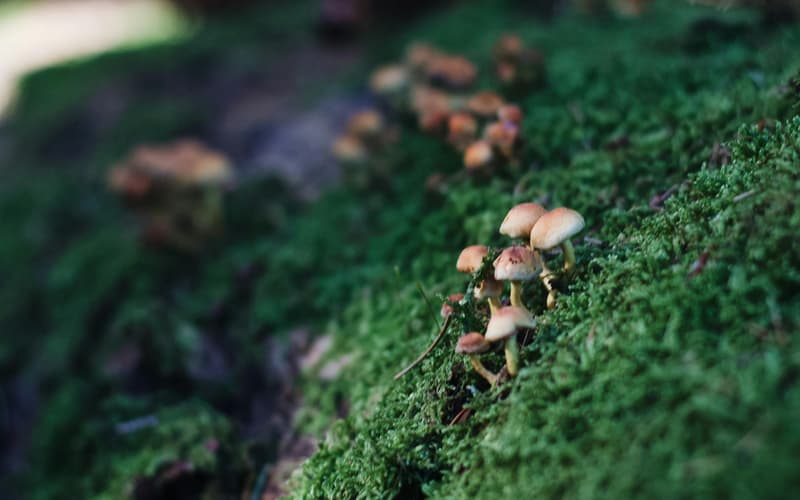
Another way of thinking about it is that the mushrooms have been running their own risk department for 450 million years. Through receptors and living networks, mycelium continuously reads the environment and responds before collapse. It might be time to take the meeting.
About the author: Phil Tovey is Director of Nature-Centric Approaches at ASRA, formerly Head of Futures at the UK Government's Defra, where he led pioneering foresight research on environmental ethics, ecosystem collapse, and AI alignment. A former Royal Marines Commando, he holds an MSc by Research in Preventative Strategy and is pursuing a PhD on eco-phenomenological dimensions of augmented human sensing in riverine environments.